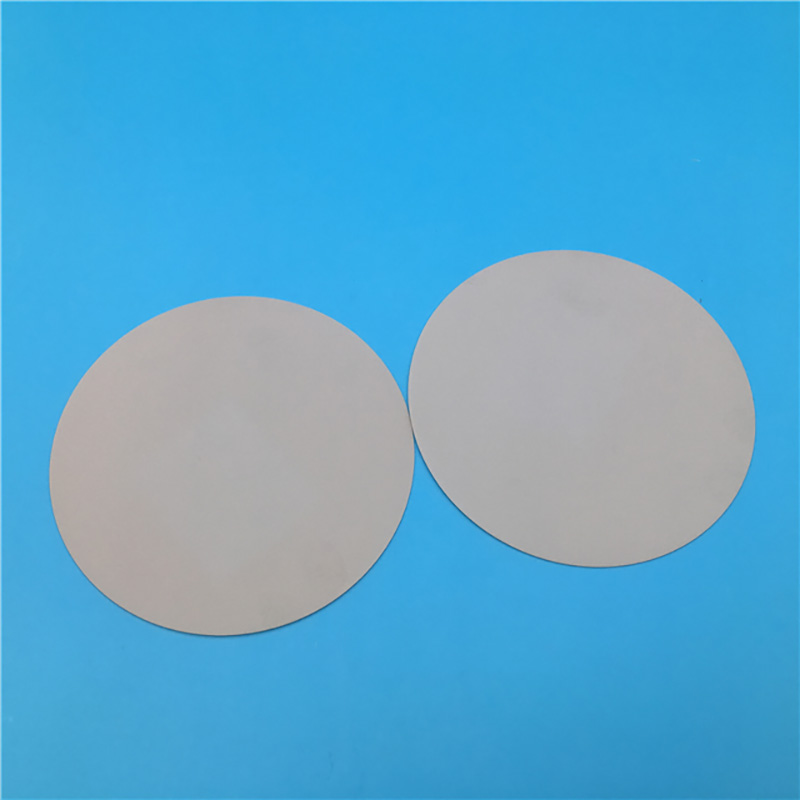
Unmatched Thermal Conductivity – Discover Aluminium Nitride Excellence
Aluminum Nitride (AIN) boasts many desirable properties that have led to its study as a high-temperature engineering ceramic material. AIN boasts superior oxidation resistance, high temperature capability and low density; all qualities that have lead to its increased use as an engineering ceramic material.
Thermal conductivity measures an object’s capacity to transmit heat energy. This process works by dispersing molecules from hotter to cooler objects via collisions, with heat transfer occurring along their paths.
Superior Thermal Conductivity
Aluminum nitride boasts four times the thermal conductivity of alumina, making it well suited to high temperature environments without degrading or breaking down. Due to its excellent electrical insulation properties and low coefficient of thermal expansion, aluminum nitride makes a useful component in power electronics, LED lighting, semiconductor devices as well as resisting most acids, alkalis and even some molten salts.
Aluminium nitride ceramics offer excellent resistance to fluorine plasma attacks, making it an excellent choice for semiconductor processing equipment components. Furthermore, their corrosion and wear resistance make them highly suitable for harsh environments.
Machinable AlN can be formed into complex geometries with precise dimensions to meet individual application needs, creating complex geometries with intricate geometries and precise dimensions. Once formed, these components can then be sintered at high temperatures to attain full density and optimal mechanical properties – this allows the material to be evaluated quickly in design iterations before investing in expensive tooling for production run. This reduces risks, time to market and costs for customers.
Lightweight Design
Aluminium nitride is a lightweight material with a density-normalized modulus of 8.9 MPa that allows it to support heavy compressive and tensile loads while still offering outstanding mechanical stability.
Aluminium nitride’s unique combination of corrosion-resistance and attack from molten metals make it an excellent material choice for applications requiring heat dissipation, such as power transistors and electronic packages.
Aluminium nitride not only offers superior thermal mitigation properties, but it also boasts superior electrical resistance and insulation properties that make it a popular choice for power semiconductors as well as electronic components like electrostatic chucks.
Aluminium nitride’s performance stems from its unique crystal structure. Its hexagonal wurtzite form facilitates covalent bonding between aluminium and nitrogen atoms, producing a durable material capable of withstanding high temperatures. Furthermore, due to the variety of techniques employed to produce aluminium nitride (direct nitridation, carbothermal reduction and chemical vapor deposition are just three processes which provide high levels of purity and precision control when producing this material).
Chemical Stability
Aluminum nitride is highly chemically stable and resistant to many acids. Furthermore, its thermal shock resistance makes it suitable for harsh environments and demanding electrical applications that demand superior heat dissipation capabilities. This makes aluminum nitride an excellent material choice when heat dissipation capabilities are required.
Aluminium Nitride (AlN) is an AlN substrate with the widest direct bandgap among all AlN substrates and superior thermal conductivity compared to Gallium Nitride, making it suitable for high power microelectronics applications. Furthermore, AlN provides non-toxic alternatives to Beryllium Oxide that resist processing gases and plasma erosion erosion processes; making this material an excellent option.
Aluminium nitride can be easily metallized and machined into large structural shapes, as well as compatible with different etching solutions, making it an excellent material choice for PCBs and other electronics applications that demand reliable materials. Furthermore, its resistance to oxidation makes it suitable for harsh environments as well as challenging electrical applications; furthermore it offers high resistance against ultraviolet radiation for medical and sterilization applications.
Corrosion Resistance
Aluminum nitride (AlN) is a hard, white material with an hexagonal wurtzite crystal structure that is produced either directly or by carbothermal reduction of aluminum oxide. Once produced, this dense technical grade ceramic material exhibits excellent chemical stability while remaining easily machinable for cutting operations.
AlN’s excellent thermal conductivity makes it ideal for use as a heat sink and package material in semiconductor devices such as integrated circuits and transistors, managing thermal load to ensure components operate within their optimal temperatures ranges.
Iron, aluminium and some molten metals cannot corrode it, while its high temperature resistance and low expansion coefficient make it an excellent material for making crucibles and casting dies to melt aluminium, copper and other metals.
Optoelectronic applications make PTFE an excellent substrate for gallium nitride (GaN)-based LEDs, thanks to its superior thermal management capability and non-toxic and chemically stable properties that enable it to efficiently dissipate internal device heat, thus prolonging device lifespan and performance. Furthermore, its non-toxicity makes PTFE an excellent material choice for implantable medical devices like pacemakers and diagnostic equipment, plus UV radiation damage resistance makes this material suitable for implantable medical uses as well.
Optical Transparency
Aluminium Nitride stands out among wide band gap semiconductors by being transparent in the visible light spectrum, making it ideal for UV-visible sensors and LEDs [9,10]. Furthermore, its excellent thermal conductivity helps ensure efficient performance when applied in these applications; heat must dissipate quickly to maintain efficiency of performance in these devices.
Aluminium nitride can be easily manufactured into various shapes and sizes to suit a wide range of applications, such as power electronics substrates or housings for electronic devices. Furthermore, this versatile material makes for excellent electrical systems designed to withstand harsh or abrasive environments or where temperatures fluctuate rapidly.
AlN’s hexagonal wurtzite crystal structure makes it an excellent candidate for etching and deposition techniques that result in high purity bulk ceramics with good optical transparency from visible light through mid-infrared ranges. In this work, PEALD-deposited AlN epi-films for both room temperatures and higher ones were measured using spectroscopic ellipsometry; their SE data was then used to fit a model that accurately represented their respective samples’ spectral dispersion curves accurately.